NRF-Funded Research Advances African Indigenous Vegetables for Food and Nutrition Security
The National Research Fund (NRF) invested KSh 15 million in a research project led by Jomo Kenyatta University of Agriculture and Technology (JKUAT) to strengthen the production and commercialisation of African Indigenous Vegetables (AIVs) in Kenya. The project, titled Upscaling African Indigenous Vegetables Climate Smart Technologies for Food and Nutrition Security in Kenya (UPSCALE-AIVs), sought to address challenges affecting indigenous vegetable production, preservation and utilisation, while promoting their contribution to food and nutrition security.
Implemented over 18 months, the project brought together researchers and industry partners from JKUAT, Masinde Muliro University of Science and Technology, IREN Growthpad Limited and the Local Development Research Institute. Led by Professor Mary Abukutsa-Onyango of JKUAT, the initiative focused on African nightshade (Managu) and jute mallow (Mrenda) in Kiambu and Kakamega counties.
The project addressed several constraints affecting the production and commercialisation of indigenous vegetables, including access to quality seeds, limited agronomic knowledge, preservation challenges and inadequate preparation and processing technologies. These challenges can limit the utilisation of indigenous vegetables and the opportunities available to farmers and other value-chain actors.
To address these constraints, the project supported farmer training on improved production practices and climate-smart technologies, established demonstration plots and promoted the use of Black Soldier Fly (BSF) frass as an organic fertiliser. It also incorporated interventions aimed at strengthening post-harvest handling and preservation, including the installation of solar dryers, improvements to vegetable storage facilities and the strengthening of farmer aggregation and preservation facilities.
In addition, the project promoted standardised recipes to encourage the consumption of indigenous vegetables. Together, these interventions addressed different stages of the value chain, from production and preservation to market access and utilisation.
The project’s significance lies in its integrated approach to agricultural research. Rather than focusing solely on production, the initiative addressed practical challenges that influence whether indigenous vegetables can be produced, preserved, processed, marketed and incorporated into diets. By bringing together research institutions and industry partners, the project also created a framework for connecting research expertise with practical agricultural needs.
For the National Research Fund, the investment reflects its mandate to mobilise and finance research that responds to Kenya’s development priorities. Supporting research on climate-smart agricultural technologies and indigenous food crops contributes to efforts to strengthen food and nutrition security while promoting the application of research beyond academic settings.
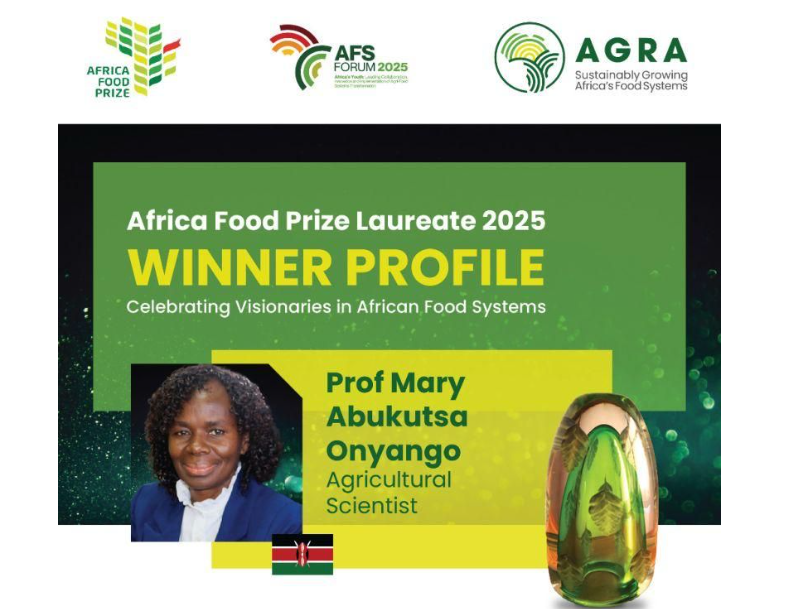
The project also highlights the importance of sustained research and advocacy in raising the profile of indigenous vegetables. Professor Abukutsa-Onyango’s longstanding contribution to this field received international recognition when she was named a joint recipient of the 2025 Africa Food Prize.
Announced on 3 September 2025 in Dakar, Senegal, the US$100,000 prize was shared by Professor Abukutsa-Onyango and Nigerian seed innovator Dr. Mercy Diebiru-Ojo in recognition of their contributions to advancing Africa’s food systems. Professor Abukutsa was recognised for her work in promoting indigenous vegetables, strengthening their place in food systems and demonstrating their value in addressing malnutrition and supporting farmer livelihoods.
Her recognition underscores the wider relevance of research and advocacy that promote locally available food resources. In the context of the UPSCALE-AIVs project, it also provides an opportunity to highlight the importance of research funding in supporting practical approaches to agricultural production, preservation and commercialisation.
Through funding this project, NRF supported research that sought to address challenges across the indigenous vegetable value chain. The initiative illustrates how research funding can bring together scientific knowledge, practical technologies and partnerships to address national development priorities, while highlighting the continued importance of African Indigenous Vegetables in food and nutrition security.