NRF-Funded Project Supports Growth and Innovation in Kenya’s Leather Industry
From improving footwear production to making better use of leather offcuts, an NRF-funded project at Dedan Kimathi University of Technology is supporting efforts to strengthen technical capacity and enterprise development within Kenya’s leather value chain.
Kenya’s leather industry presents opportunities for local manufacturing, job creation and value addition. However, realising this potential requires technical expertise, improved production practices and the capacity of enterprises to produce quality goods that meet market needs.
The National Research Fund (NRF) funded a project at Dedan Kimathi University of Technology (DeKUT) aimed at addressing these needs. Titled Capacity Building for Job Creation and Growth of Leather Goods and Leather Footwear Manufacturing Enterprises in Kenya, the project is led by Dr Paul Tanui and focuses on strengthening the capabilities of people and enterprises involved in leather goods and footwear manufacturing.
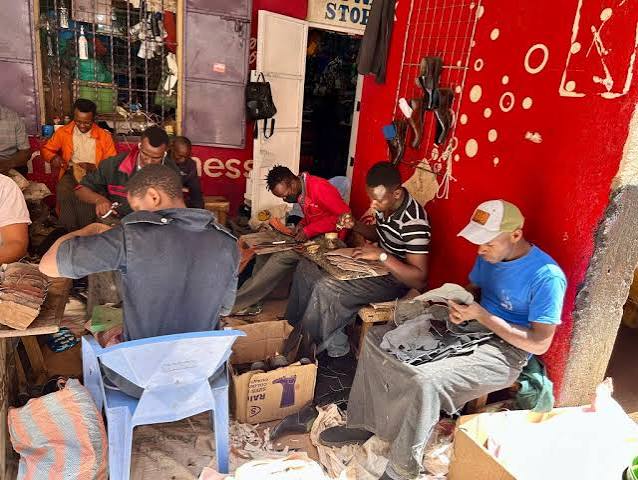
A key component of the project has been practical skills development. Through hands-on training, 24 trainees acquired skills in leather technology and the production of shoes, bags, keyholders and other leather accessories. The training covered material selection, finishing techniques, product quality and the effective use of leather offcuts.
These competencies are relevant to the day-to-day operations of leather enterprises, where product quality, efficient use of materials and consistent production can influence business performance.
The potential benefits are illustrated by the experience of Kennedy of Jamii Footwear Workshop in Nyeri, who reported an increase in daily shoe production from approximately 11 or 12 pairs to 20 pairs following the training. His experience provides an example of how improved technical skills can contribute to greater production capacity at enterprise level.
The project has also highlighted opportunities to make better use of leather materials. By encouraging the production of smaller items, such as keyholders, from leather scraps, the initiative promotes the utilisation of offcuts while enabling artisans to diversify their product range. This approach connects practical manufacturing skills with resource efficiency and opportunities for additional value creation.
Knowledge sharing has been another aspect of the initiative. Some former trainees have taken on training roles, sharing their skills with other institutions and communities. This helps extend access to practical leatherworking knowledge beyond the initial group of trainees.
Together, these activities address several considerations relevant to the development of Kenya’s leather industry: technical capacity, production efficiency, product diversification and the transfer of skills. They also demonstrate the importance of equipping artisans and enterprises with practical competencies that can be applied within their businesses and production environments.
For the National Research Fund, the project reflects the role of research funding in supporting initiatives that respond to practical industry needs. By funding work focused on leather goods and footwear manufacturing, NRF contributes to efforts to strengthen local technical capacity, support enterprise development and promote value addition within Kenya’s leather value chain.
The initiative highlights the potential of research-supported interventions to connect technical knowledge with practical applications in local industries. Strengthening these capabilities is an important part of creating opportunities for enterprise growth, more efficient production and greater utilisation of locally available materials.